Indiana's climate is tough on outdoor wood. Learn how often to restain your deck in Indianapolis, the signs it's overdue, and what a professional deck staining job actually involves.
Indiana doesn't go easy on outdoor wood. The humidity, UV exposure, freeze-thaw cycles, and spring rain that define Central Indiana's climate combine to break down unprotected decks and fences faster than most homeowners expect. Staining isn't just cosmetic — it's the primary line of defense between your wood and serious structural damage.
Here's what Indianapolis homeowners need to know about deck and fence staining, including timing, frequency, stain vs. paint, and what a professional job actually involves.
How Often Should You Restain a Deck in Indianapolis?
This is the most common question we get about deck maintenance, and the honest answer is: it depends on the surface.
Horizontal surfaces — the decking boards you walk on and the tops of railings — take the most abuse. Moisture sits on them, UV hits them directly, and foot traffic grinds away at the finish. In Indiana's climate, these surfaces typically need cleaning and restaining every 1–2 years to stay properly protected.
Vertical surfaces — the sides of posts, balusters, and fascia boards — hold up considerably longer because water runs off rather than pooling. These can often go 2–4 years between treatments.
As a general maintenance schedule for Indianapolis homeowners: plan for a full deck cleaning and restain every 2–3 years, with annual inspection to catch any areas showing early wear.
Signs Your Deck or Fence Needs Staining Now
Water is no longer beading. When new stain is working properly, water beads up on the surface and runs off. When it soaks straight in, the protective film has broken down and the wood is absorbing moisture directly — a condition that leads to swelling, cracking, and rot.
Color has faded significantly. Heavy fading means UV has broken down both the pigment and the protective compounds in the stain film. Sun-bleached wood is also drying out and becoming more brittle.
You see graying or darkening. Gray wood indicates UV degradation. Dark staining or black spots signal mildew — moisture has gotten into the wood grain. Both conditions need to be addressed before restaining.
The existing finish is peeling or flaking. Peeling stain means the film has failed and needs to come off before a new coat can be applied properly.
It's been more than 3 years since the last treatment. Even if it looks okay, wood that hasn't been treated in several years may be less protected than it appears.
Stain vs. Paint for Indianapolis Decks
This is a genuine choice worth thinking through, and the answer depends on your priorities.
Deck stain penetrates into the wood rather than sitting on top of it. It preserves the natural texture and, depending on the opacity, can show varying amounts of wood grain. Stain is generally easier to maintain — you can apply a new coat over existing stain without full stripping. The downside is that it requires more frequent reapplication, typically every 2–3 years for horizontal surfaces.
Deck paint creates a film on top of the wood. It completely covers the grain, provides better color uniformity, and when done right can last 5–10 years before needing a repaint. The tradeoff is that once paint is applied, you're committed to painting going forward — restaining over paint doesn't work, and stripping paint is labor intensive.
For most Indianapolis decks that are in reasonably good condition, we recommend staining. It's easier to maintain, more forgiving over time, and keeps the natural character of the wood visible.
What the Hoosier Built Deck Staining Process Looks Like
Step 1 — Inspection
We assess the current condition of the wood: any rot, structural damage, loose boards, or nails that need to be addressed before staining.
Step 2 — Cleaning
A thorough cleaning removes mildew, dirt, graying, and any remaining old stain that's failing. We use a deck cleaner and appropriate pressure to open up the wood grain for maximum stain absorption.
Step 3 — Dry Time
This step is non-negotiable in Indiana's climate. We verify the wood is fully dry before staining — staining damp wood traps moisture underneath the new coat and causes premature failure.
Step 4 — Stain Application
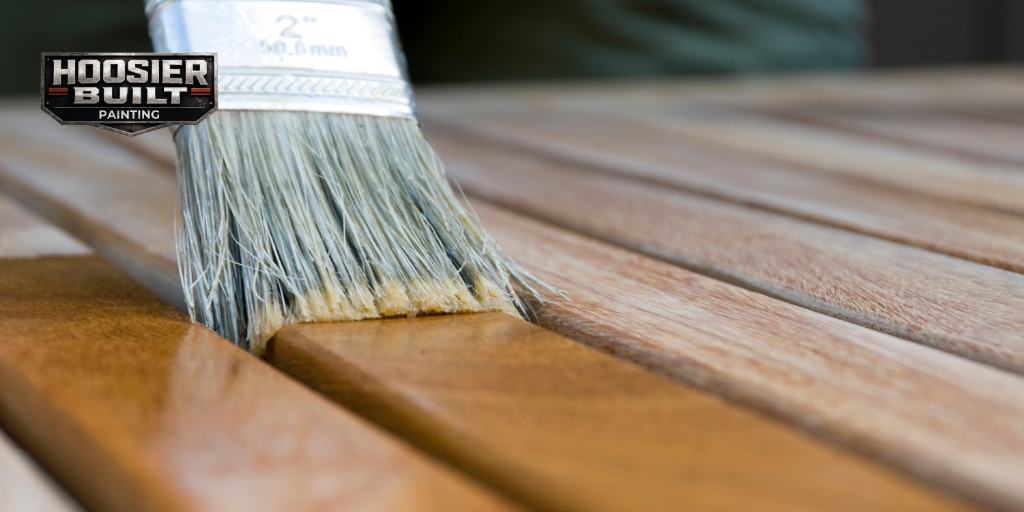
We apply stain by brush and roller, back-brushing to work the product into the grain for maximum penetration and even coverage. Horizontal surfaces and vertical surfaces are treated according to their different exposure conditions.
Step 5 — Final Inspection
We check coverage, edges, and problem areas before leaving. Any missed spots or light areas get addressed before the job is complete.
Deck Staining Service Areas
Hoosier Built Painting provides deck and fence staining throughout Indianapolis, Carmel, Fishers, Noblesville, Westfield, Zionsville, Brownsburg, Avon, Greenwood, McCordsville, Whitestown, and Plainfield.
Free Estimate
Ready to Transform Your Home?
Get a free, no-obligation estimate from Central Indiana's most trusted painters.
Tags